Names and locations have been changed to protect privacy. Akiko has given her full permission for this interview to be published.
Hello again! In the first part of this interview, Growing Up Blind in Japan, I wrote about Akiko's childhood: twelve years in Japan's special needs education system, nine of them as the only student in her class, and the move to Tokyo at fifteen that finally gave her classmates, independence, and the orientation and mobility skills to navigate the world.
Today I want to talk about what happened when she started applying for jobs.
For many disabled people in Japan, getting through education is one enormous chapter. Finding work is another. Disability employment is not only about getting through an interview or receiving an offer. It is about whether the job will make room for you to contribute, develop and belong once you arrive.
How Japan's disability-employment quota system works
Before getting into Akiko's experience, it is worth explaining a little context, because Japan has a specific legal structure around disability employment and it shapes many of the choices available to disabled jobseekers.
Since 1 July 2026, private companies in Japan have been required to employ disabled people at a statutory rate of 2.7% of their workforce, and the threshold for employers covered by the quota is now 37.5 regular employees. The official policy is published by Japan's Ministry of Health, Labour and Welfare.
For larger companies with more than 100 regular employees, falling short of the quota can mean paying a levy of 50,000 yen per month for each unfilled position. There is an English-language overview of the levy and grant system from the Japan Organization for Employment of the Elderly, Persons with Disabilities and Job Seekers (JEED). The idea is to create a real incentive to hire disabled people and invest in workplaces that can support them. It is not simply a symbolic target.
One way some large companies meet this obligation is through special subsidiaries. A special subsidiary is a separate company, created by a parent company specifically to employ disabled workers, and disabled employees hired there can count towards the parent company's legal quota. To be officially certified, a subsidiary must meet conditions set by the Ministry, including employing at least five disabled workers, having disabled people make up at least 20% of its workforce, and ensuring that at least 30% of those disabled employees have severe disabilities. The Ministry's overview of the special subsidiary system sets out the criteria in full.
The intention behind this system is genuinely good. In many cases, special subsidiaries offer accessible environments, managers with real experience of disability inclusion, and workplace adjustments that are already built in. For disabled people who have faced repeated rejection through general recruitment, they can be a valuable route into stable work.
But there is another side to it. Some disabled people describe being steered towards special subsidiaries before they have had the chance to try elsewhere, and the work available may not always match someone's ambitions or qualifications. The system can protect people. It can also quietly narrow the options imagined for them. Both things can be true.
For wider context, the UN Convention on the Rights of Persons with Disabilities, which Japan ratified in 2014, frames employment as a right to work on an equal basis with others in an open and inclusive labour market, and the International Labour Organization's work on disability inclusion looks at how quota and levy systems perform in practice across different countries.
Akiko wanted to try the general recruitment process. She wanted a corporate environment, a wide variety of colleagues, and work that would stretch her.
Akiko: “There is clearly a barrier to finding employment.”
The phone call, and the question it left behind
At the company where she now works, Akiko made it all the way through to the final interview stage. Then she was rejected.
Akiko: “I had made it all the way to the end. So it was really difficult to accept.”
A week later, they called her back.
Akiko: “They asked, would you be interested in this position? I was so happy.”
When she told me this part of the story, I was happy for her too. But almost immediately, she described another feeling arriving alongside that happiness.
Akiko: “I want to believe I was hired because of my abilities, not because of the quota system. But part of me still wonders whether they hired me partly to meet the government's disability-employment targets.”
It is a difficult ambiguity to carry. The quota system may have opened a door. Akiko cannot know exactly why that door opened when it did, or whether it would have opened in the same way without her disability status. She has to walk through it and build a working life on the other side of it regardless.
That question is not a sign of ingratitude. It is a sign that a system designed to create opportunity can still make people feel unsure of how they are being seen.
What inclusion actually looks like after the hire
In a lot of policy conversations, employment is treated as the final outcome. Someone has been hired. A target has been met. The number goes up.
But employment statistics cannot tell us whether a person is trusted with meaningful work, given opportunities to progress, or included in the relationships and decisions that make a workplace feel like a real community.
Hillary: “Do you enjoy your work?”
Akiko: “I love my coworkers. But I feel swayed by the disability employment label. I feel like I am being given simple tasks that anyone could do. Because I am disabled, I can't help but wonder if they hired me just to meet their employment quota.”
A workplace is not only its physical office. It is also the work people are trusted with, the information they can access, the conversations they are invited into, and the future they are allowed to imagine there.
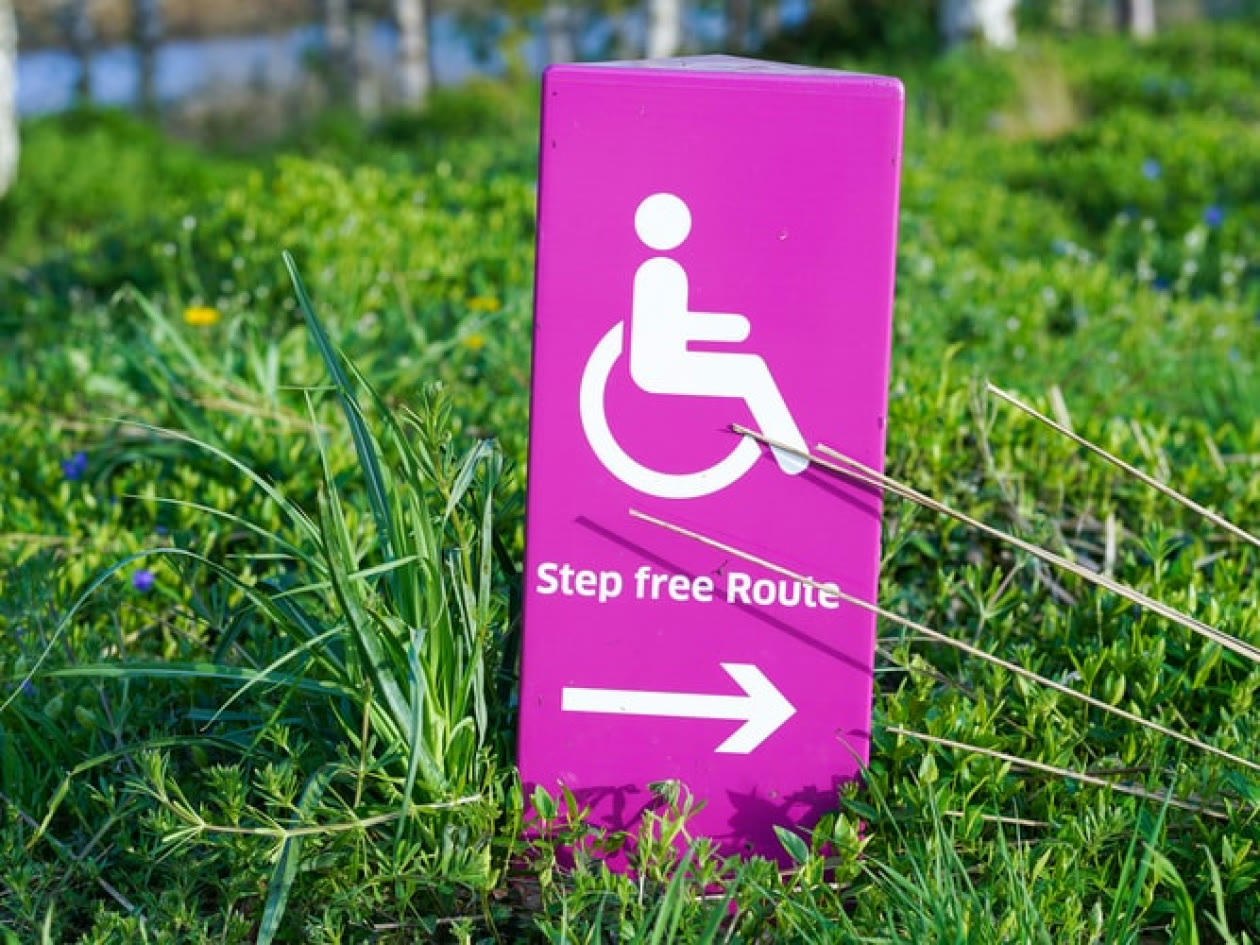
For blind and visually impaired employees, the built environment matters within that too. Wayfinding, tactile paving on the route from the station, Braille and tactile signage, screen-reader-compatible documents and consistent staff awareness all shape whether someone can independently reach the office, find a meeting room, access shared materials, join informal conversations, or ask for support without turning every ordinary task into a negotiation. Access is not complete when someone can simply enter the building. The question is what happens after they enter it. We wrote about the same pattern on university campuses in Your Campus Is Accessible. But Is It Actually?.
A company can meet its 2.7% quota and still assign disabled employees work that asks very little of them. It can offer an accessible route through the front door and then quietly signal, through what it assigns and what it withholds, that it is not quite sure what to do with the people who have come through it.
Akiko is watching for that signal every day, while doing her job.
Beyond the disability-employment label
Hillary: “Do you think the company wants to be inclusive and cares about diversity?”
Akiko: “I think they accepted me because the company is trying to adopt that mindset. While I have mixed feelings about the system, my goal is to work in a corporate environment and collaborate with a variety of people, so I am grateful to be here.”
Akiko is not arguing that Japan's quota system has no value. It has opened doors for many people who might otherwise have been excluded from work altogether. She is grateful to be working, and she likes the people around her.
But she is describing the gap between being hired and being included. Inclusion is not a special task set aside for someone because they are disabled. It is the ordinary work of tailoring a task to the person, trusting them with it, and making them feel as equal as everyone else while they do it. The same principle applies to the spaces that work happens in. A building can be compliant, accessible on paper, and still place the burden of adaptation on the person moving through it. Akiko spent years in school learning how to bypass an environment that was not built for her. The better question is not how well she learned to compensate, but why the environment required so much compensation in the first place.
The most useful thing an institution or employer can do, based on what we have heard from her, is to ask. Not to assume what a blind employee needs, not to decide in advance what she is capable of, but to ask her directly, and to keep asking as the work and the space change around her. That is where real inclusion begins: in the habit of asking, listening, and adjusting.
At Cicely, that is the work we are trying to make easier.
Akiko: “My goal is to work in a corporate environment and collaborate with a variety of people. So I am grateful to be here.”
That is what she is asking for: not special treatment, not an inspirational story, just the chance to contribute fully alongside other people.
See you next time.
Frequently asked questions
- What is Japan's disability-employment quota?
- Japan's disability-employment quota is a legal requirement for employers to hire a minimum proportion of disabled workers. For private companies, the statutory rate became 2.7% on 1 July 2026, and the quota covers employers with at least 37.5 regular employees. Japan's Ministry of Health, Labour and Welfare publishes the official policy information.
- Do all companies that miss the quota pay a fine?
- Not exactly. Employers with more than 100 regular employees that fall short of the quota pay a levy of 50,000 yen per month for each person by which they fall short. The levy is part of a wider system that also provides financial support to employers who exceed the quota and to organisations making workplace adjustments. JEED publishes an English overview of the levy and grant system.
- What is a special subsidiary in Japan?
- A special subsidiary is a company established by a parent company specifically to employ disabled workers. If it is officially certified, disabled employees hired there count towards the parent company's disability-employment quota. Special subsidiaries can provide a supportive employment route, including experienced managers and built-in workplace adjustments, but some disabled people feel the system can separate them from mainstream corporate roles or limit the range of work available to them. The Ministry's overview of the special subsidiary system explains the official criteria.
- Can a disabled person use general recruitment and still count towards the quota?
- Yes. A disabled person does not have to work in a special subsidiary to count towards an employer's quota. Someone hired through a company's general recruitment process can also be included in the quota calculation, where the relevant legal conditions are met.
- Is Japan's quota system good or bad?
- It is neither simple nor settled. The system has helped create employment opportunities and encourages employers to treat disability employment as a concrete responsibility. At the same time, disabled people can feel conflicted when they are unsure whether they were hired for their skills and potential, or mainly to help a company meet a target. Akiko's story shows why both employment numbers and lived experience matter: a quota can get someone through the door, but it cannot on its own guarantee meaningful work, progression or belonging.
- What workplace adjustments matter most for blind and visually impaired employees?
- In our research, the adjustments that matter most are rarely one-off purchases. They include screen-reader-compatible documents and internal systems, accessible wayfinding and tactile signage inside the building, a predictable and maintained route from the nearest station, meeting materials shared in advance in accessible formats, colleague and manager awareness, and a low-friction way to report when something stops working. The last one matters because access degrades over time.
- How does this compare with disability employment law elsewhere?
- Quota and levy systems exist in many countries, including Germany, France and Japan, while others such as the UK and the US rely primarily on anti-discrimination duties and reasonable adjustments. The International Labour Organization and the UN Convention on the Rights of Persons with Disabilities both look at how these approaches perform against the goal of an open, inclusive labour market.